
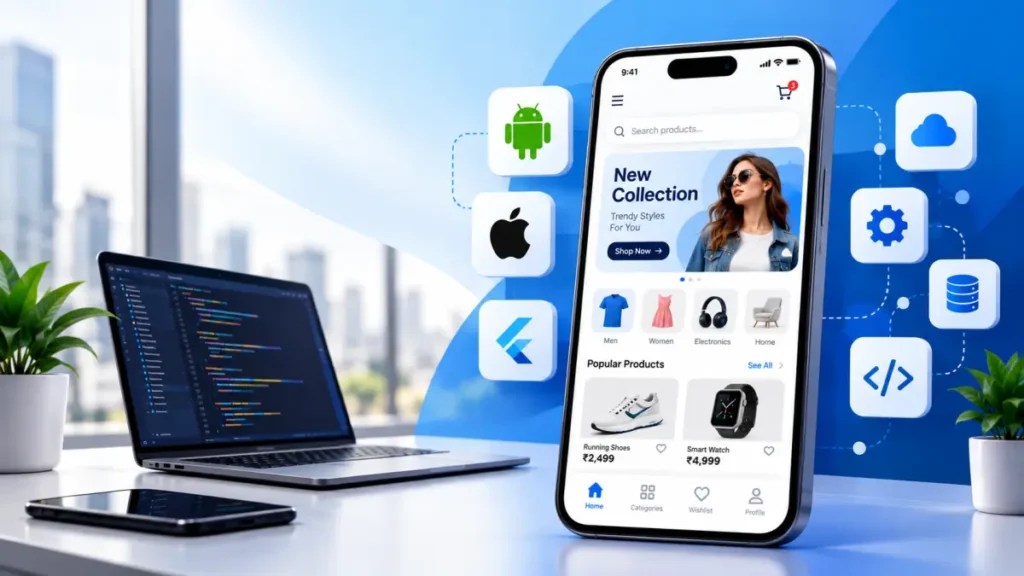
Mobile App Development: Types, Process, Cost & How to Build an App
Mobile apps have become an important part of how businesses connect with customers, sell products, provide services, and build long-term relationships. From e-commerce and education to healthcare, finance, food delivery, and professional services, businesses across industries are investing in mobile applications to make their services more accessible. But developing an app is more than just designing a few screens and publishing them on an app store. A successful mobile application requires proper planning, UI/UX design, development, testing, security, deployment, and continuous maintenance. If you are planning to build an app for your business, this guide explains what mobile app development is, different types of apps, the development process, important features, technologies, development costs, and how to choose the right approach. What Is Mobile App Development? Mobile app development is the process of creating software applications specifically designed to run on smartphones and tablets. Depending on the business requirement, an application can be developed for Android, iOS, or both platforms. The development process generally includes: Business and project planning Market and competitor research UI/UX design Front-end development Back-end development Database integration API integration Security implementation Testing and quality assurance App store deployment Maintenance and updates A professionally developed app should not only look good but also provide a fast, secure, reliable, and convenient experience for users. Why Do Businesses Need a Mobile App? A mobile application can help businesses create a direct digital connection with their customers. Unlike relying entirely on third-party platforms, an app gives businesses greater control over the customer experience. Some common benefits include: Direct Customer Engagement Businesses can communicate directly with customers through app notifications, offers, updates, and personalized content. Better Customer Experience An application can be designed specifically around the needs of a particular audience, making it easier for customers to browse, purchase, book, communicate, or access services. Increased Brand Visibility Having your business application installed on a customer’s smartphone keeps your brand accessible whenever the customer needs your product or service. Online Sales and Payments E-commerce and service businesses can integrate product catalogs, shopping carts, payment gateways, subscriptions, and order management into their apps. Customer Loyalty Businesses can use loyalty programs, personalized offers, reward points, memberships, and exclusive deals to encourage repeat purchases. Types of Mobile Apps Before starting development, it is important to understand which type of application is suitable for your business. The right choice depends on your target audience, budget, required features, performance expectations, and future plans. 1. Native Mobile Apps Native applications are developed specifically for one operating system. Android applications are commonly developed using Kotlin or Java, while iOS applications are commonly developed using Swift. Native development can provide strong performance, smooth user experience, better platform integration, and access to device-specific features. It can be a suitable option when an application requires high performance or advanced platform functionality. 2. Cross-Platform Mobile Apps Cross-platform development allows developers to create applications for multiple operating systems using a shared codebase. Popular technologies include Flutter · React Native. This approach can reduce development time and make it easier to maintain applications for Android and iOS when the project does not require extensive platform-specific functionality. 3. Hybrid Mobile Apps Hybrid applications combine web technologies with mobile application frameworks. They can be useful for certain projects where businesses need broader platform compatibility and relatively faster development. The suitability of hybrid development depends on the application’s functionality, performance requirements, and long-term business goals. 4. Progressive Web Apps Progressive Web Apps, commonly known as PWAs, are web applications that provide an app-like experience through a browser. They can be useful for businesses that want mobile-friendly functionality without developing a traditional native application for every platform. Mobile App Development Process A successful application starts with a structured development process. Here are the major stages. Step 1: Define the Business Objective The first step is to clearly understand why you need the application. Ask questions such as: What problem will the app solve? Who are the target users? What services or products will it provide? How will users interact with the business? What makes the app different from competitors? A clear objective helps prevent unnecessary features and keeps the project focused. Step 2: Research and Project Planning Once the business objective is clear, the next stage involves researching competitors, understanding customer expectations, defining technical requirements, and planning the project. A detailed project plan generally covers Features · User Roles · Technology Stack · Development Timeline · Estimated Budget · Third-Party Integrations · Security Requirements. This stage is important because changes made during development can increase both the cost and timeline of a project. Step 3: UI/UX Design UI/UX design determines how the application looks and how users interact with it. A good mobile app should make it easy for users to understand where they are, what they can do, and how they can complete an action. The design process can include Wireframes · User Flows · UI Design · Interactive Prototypes · Design System · Mobile Responsiveness. A clean interface, readable typography, consistent branding, simple navigation, and well-placed buttons can significantly improve the user experience. Step 4: Front-End and Back-End Development Once the design is approved, developers start building the application. The front-end includes everything users see and interact with, such as screens, buttons, menus, forms, product pages, dashboards, and navigation. The back-end manages the technical operations behind the application, including databases, authentication, APIs, business logic, user information, orders, payments, and server-side processes. Both components need to work together properly for an application to provide a reliable experience. Step 5: API and Third-Party Integration Many modern mobile applications require external services to provide additional functionality. Depending on the business requirements, an application may integrate Payment Gateways · Google Maps · Social Login · SMS Services · Email Services · WhatsApp Services · Analytics Tools · CRM Systems · Shipping Platforms. For example, an e-commerce app may require payment and shipping integrations, while a service-booking application may require maps, notifications, calendars, and online payment functionality. Step 6: Testing and Quality
Mobile App Development: Types, Process, Cost & How to Build an App Read More »