
What Is Branding? Brand Identity, Design & Strategy Guide


Branding is more than creating a logo or choosing attractive colors for a business. It is the complete process of creating a unique identity, personality, and perception for a business in the minds of its customers.
Whether you run a startup, local business, e-commerce store, professional service, or established company, strong branding can help people recognize your business, understand what you offer, and remember you when they are ready to buy.
In today’s competitive digital market, businesses are not only competing on products and prices. They are also competing on trust, experience, presentation, recognition, and customer perception.
This guide explains what branding is, what brand identity includes, why branding matters, how branding works, and how businesses can build a strong and consistent brand.
What is branding?
Branding is the strategic process of creating and managing a business’s identity and how people perceive it.
It includes the visual, verbal, and emotional elements that make a business recognizable and different from its competitors.
These elements can include:
- Brand name
- Logo
- Brand colors
- Typography
- Graphic design
- Brand messaging
- Tone of voice
- Packaging
- Website design
- Social media design
- Marketing materials
- Customer experience
- Brand guidelines
For example, when customers see a particular color combination, logo style, packaging design, or communication style, they may immediately associate it with a specific company. That recognition is an important part of effective branding.
Branding vs Logo Design
One of the most common misconceptions is that branding and logo design are the same thing.
They are not.
A logo is one element of a brand identity, while branding is the broader strategy that defines how the business presents itself and communicates with its audience.
Think of it this way:
Logo = Identification
Brand Identity = Visual and verbal system
Branding = Overall strategy and perception
A professional logo can help people identify your business, but consistent branding helps them understand and remember it.
What Does Branding Include?
A successful branding strategy usually combines several different elements.
1. Brand Strategy
Brand strategy defines the foundation of your brand.
It answers important questions such as:
- Who is your target audience?
- What problem does your business solve?
- What makes your business different?
- What are your brand values?
- What position should your brand occupy in the market?
- Why should customers choose you?
A clear strategy makes the rest of the branding process more focused and consistent.
2. Logo Design
A logo is a visual representation of your business.
A good logo should be:
- Simple
- Recognizable
- Relevant
- Scalable
- Memorable
- Suitable for different platforms
Your logo may appear on your website, social media profiles, packaging, business cards, advertisements, signage, presentations, and other marketing materials.
3. Brand Colors
Colors play an important role in visual communication.
A brand may use a specific combination of primary, secondary, and accent colors across its marketing materials.
For example, a business may choose colors that communicate qualities such as professionalism, energy, luxury, trust, creativity, or simplicity.
The important point is not simply choosing attractive colors. The colors should support the brand’s positioning and remain consistent across different touchpoints.
4. Typography
Typography refers to the fonts and text styles used by a brand.
A brand may have specific fonts for:
- Headings
- Body text
- Website content
- Social media designs
- Advertisements
- Presentations
- Printed materials
Consistent typography helps create a recognizable visual language.
5. Brand Voice and Messaging
Branding is not only visual.
The words a business uses also influence how customers perceive it.
Brand voice defines how the business communicates.
For example, a brand may communicate in a tone that is:
- Professional
- Friendly
- Premium
- Conversational
- Educational
- Bold
- Minimal
A consistent voice can make communication more recognizable across websites, social media, advertisements, emails, and other channels.
6. Brand Guidelines
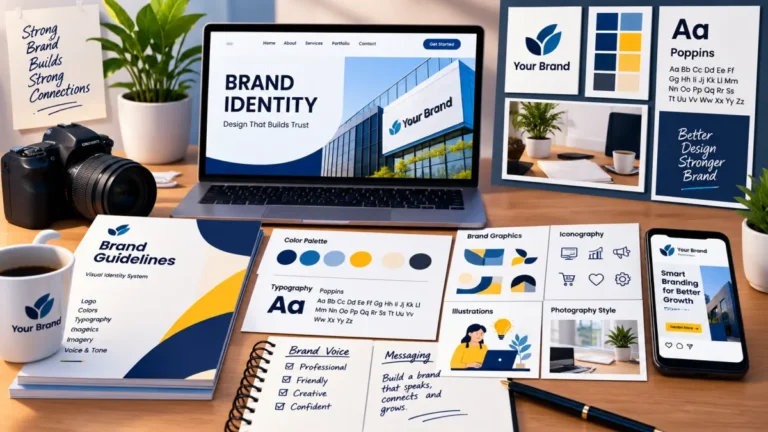
Brand guidelines document how a brand should be represented.
A professional brand guideline may include:
- Logo usage
- Color palette
- Typography
- Photography style
- Graphic elements
- Icon style
- Social media design rules
- Brand voice
- Layout guidelines
- Do’s and don’ts
Brand guidelines are particularly useful when multiple designers, marketers, agencies, or employees work on the same brand.
Why Is Branding Important for a Business?
Strong branding can support a business in several ways.
Builds Brand Recognition
Consistent logos, colors, typography, messaging, and visual styles make it easier for customers to recognize your business.
The more consistently a brand appears across different channels, the easier it can become for customers to associate those visual elements with the company.
Creates a Professional Image
Presentation matters.
A well-designed website, social media profile, packaging, advertisement, and marketing material can create a more professional appearance.
For new businesses especially, professional branding can help establish credibility when customers are encountering the company for the first time.
Helps Differentiate Your Business
Many businesses offer similar products or services.
Branding provides a way to communicate what makes your business different.
Instead of competing only on price, businesses can communicate their values, positioning, personality, expertise, and customer experience.
Builds Customer Trust
Customers are more likely to engage with businesses they understand and recognize.
Consistent branding across your website, social media, advertisements, packaging, and other customer touchpoints creates a more unified experience.
Supports Marketing
Branding and marketing work together.
Marketing campaigns attract attention, while branding helps customers identify the business behind those campaigns.
For example, your Google Ads, Meta Ads, social media posts, website, brochures, and promotional creatives should ideally communicate a consistent visual identity.
What Is Brand Identity?
Brand identity is the collection of visual and verbal elements a business uses to present itself to its audience.
It can include:
- Logo
- Color palette
- Typography
- Imagery
- Icons
- Graphic elements
- Brand voice
- Messaging
- Packaging
- Marketing templates
Brand identity answers the question:
“How should people recognize and experience this business?”
A strong identity creates consistency across different platforms and marketing channels.
How to Build a Strong Brand Identity
Building a brand identity requires more than designing a logo.
Step 1: Understand Your Business
Start by defining:
- Business goals
- Products or services
- Target customers
- Market
- Competitors
- Unique selling proposition
Step 2: Define Your Target Audience
Your branding should be relevant to the people you want to reach.
A luxury fashion brand, children’s education company, technology startup, and local restaurant may all require completely different visual identities.
Step 3: Research Competitors
Study competitors to understand:
- Their visual style
- Messaging
- Positioning
- Customer perception
- Strengths and weaknesses
The purpose is not to copy competitors but to identify opportunities for differentiation.
Step 4: Develop the Visual Identity
Create the core visual system:
- Logo
- Colors
- Fonts
- Supporting graphics
- Photography direction
- Iconography
- Layout styles
Step 5: Create Brand Guidelines
Document the rules so the brand remains consistent.
This becomes especially important when your business grows and different people start creating marketing materials.
Step 6: Apply the Brand Consistently
Use the identity across:
- Website
- Social media
- Google Business Profile
- Advertisements
- Packaging
- Business cards
- Brochures
- Presentations
- Email marketing
- Offline branding
Consistency is one of the most important parts of building recognition.
Branding for Small Businesses
Branding is not only for large corporations.
Small businesses can also benefit from a clear and professional brand identity.
A local business may need branding for:
- Shop signage
- Website
- Social media
- Visiting cards
- Packaging
- Promotional creatives
- Google Business Profile
- Digital advertisements
For small businesses, the goal should not necessarily be creating an expensive identity. The focus should be creating a clear, consistent, relevant, and memorable brand.
Branding for E-commerce Businesses
Branding is particularly important for e-commerce businesses because customers often interact with a brand digitally before making a purchase.
Important branding touchpoints can include:
- Shopify or e-commerce website
- Product photography
- Product packaging
- Thank-you cards
- Social media
- Product descriptions
- Advertisements
- Email campaigns
- WhatsApp communication
A consistent brand experience can help customers recognize your products and create a more professional shopping experience.
Branding and Digital Marketing
Branding and digital marketing should work together rather than operate separately.
For example, when a business runs a Meta Ads campaign, customers may see:
- Advertisement
- Social media profile
- Website
- Product or service page
- Contact or checkout page
If each touchpoint looks completely different, the customer experience can feel inconsistent.
A consistent brand identity helps connect these touchpoints into one recognizable experience.
Common Branding Mistakes Businesses Should Avoid
Using Too Many Colors
A brand does not need dozens of colors. A focused color palette is generally easier to manage consistently.
Changing Fonts Frequently
Using different fonts on every creative can make the brand look inconsistent.
Designing Without a Strategy
Starting with a logo without understanding the target audience, positioning, and business goals can lead to an identity that looks attractive but does not communicate the right message.
Copying Competitors
Your brand should have its own identity rather than becoming a variation of another company’s design.
Ignoring Consistency
Using one logo on the website, another version on social media, and different colors in advertisements can weaken visual consistency.
Frequently Asked Questions About Branding
What is branding in simple words?
Branding is the process of creating a recognizable identity and perception for a business through its strategy, visuals, communication, and customer experience.
What is the difference between branding and marketing?
Branding defines who your business is and how it should be perceived. Marketing focuses on promoting your business, products, or services to reach and convert customers.
Is a logo the same as branding?
No. A logo is one part of a brand identity. Branding covers the broader strategy, visual identity, communication, positioning, and customer experience.
Why is brand identity important?
Brand identity helps customers recognize your business and creates consistency across your website, social media, advertising, packaging, and other marketing channels.
How much does branding cost in India?
Branding costs can vary significantly depending on the scope of work, business requirements, designer or agency, number of deliverables, and level of strategic work involved. A basic logo project and a complete brand identity package are very different services.
Can a small business benefit from branding?
Yes. Small businesses can use branding to create a professional appearance, differentiate themselves, improve recognition, and maintain consistency across their marketing channels.
Final Thoughts
Branding is not simply about making a business look attractive. It is about creating a clear, consistent, recognizable, and meaningful identity that connects the business with its target audience.
From strategy and logo design to colors, typography, messaging, website design, social media, packaging, and customer experience, every touchpoint contributes to how people perceive a brand.
For businesses looking to grow in a competitive market, investing in a well-planned brand identity can provide a strong foundation for marketing and long-term brand recognition.
If you are planning to launch a new business, redesign an existing identity, or create a consistent visual presence across digital platforms, professional branding and graphic design services can help turn your business strategy into a cohesive brand experience.
Related Services:



Pingback: Brand Identity Design: What It Includes & Why It Matters - Sidads