
Brand Identity Design: What It Includes, Why It Matters & How to Build a Strong Brand

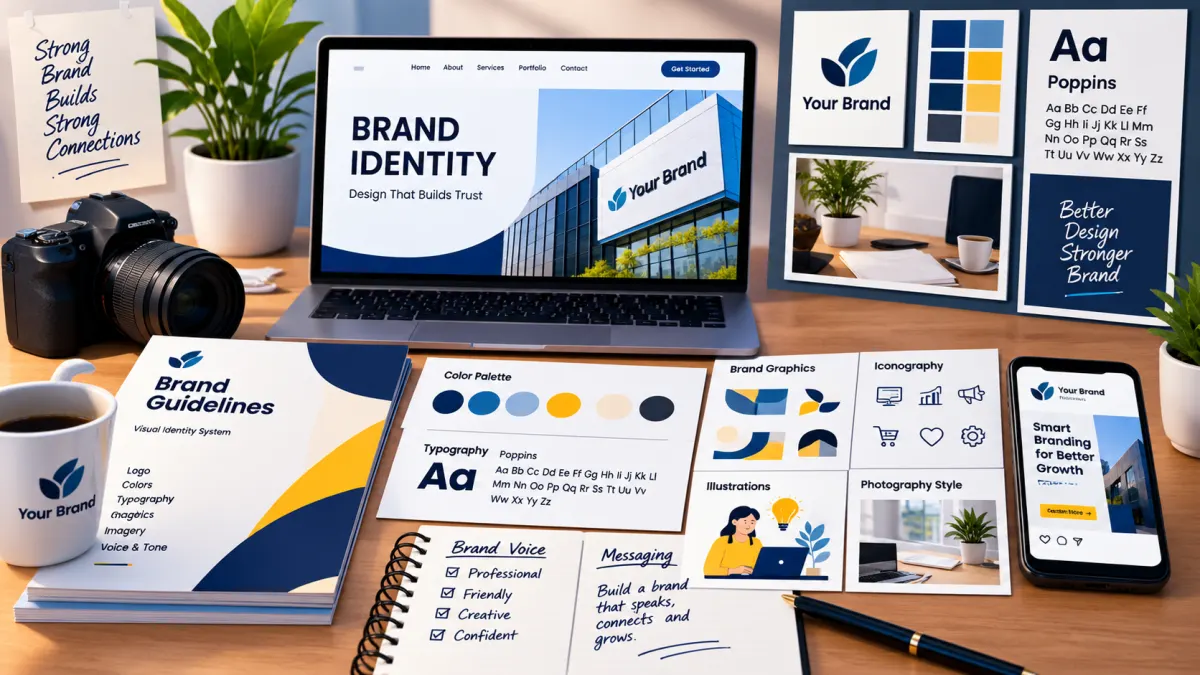
A business may have a great product, competitive pricing, and excellent service, but if people cannot recognize or remember it, building a strong market presence becomes difficult. This is where brand identity design becomes important.
Brand identity is the visual and verbal system that represents a business and helps customers recognize it across different touchpoints. It goes beyond a logo and includes colors, typography, imagery, graphics, messaging, and brand guidelines.
Whether you are launching a startup, growing an e-commerce business, running a local company, or rebranding an established organization, a well-planned brand identity can create consistency and make your business easier to recognize.
In this guide, we will explain what brand identity design is, what it includes, why it matters, how to build one, and which mistakes businesses should avoid.
What Is Brand Identity Design?
Brand identity design is the process of creating the visual and verbal elements that represent a business and communicate its personality to its target audience.
It determines how a brand looks, sounds, and presents itself across different platforms. A complete brand identity can include the following sequence:
Logo → Color Palette → Typography → Brand Graphics → Photography Style → Iconography → Illustrations → Brand Voice → Messaging → Packaging → Business Stationery → Social Media Templates → Website Design → Brand Guidelines
The goal is to create a unified identity that customers can recognize across different interactions with the business.
Brand Identity vs Brand vs Branding
These three terms are often used interchangeably, but they have different meanings.
Brand → Perception
Brand Identity → Representation
Branding → Process
The brand represents the overall perception people have about a business. Brand identity represents the visual and verbal elements a business creates to present itself. Branding is the broader process of building, communicating, and managing that identity and perception.
What Does a Brand Identity Include?
A professional brand identity is made up of multiple connected elements.
1. Logo Design
The logo is often the most recognizable visual element of a brand. A good logo should work across different sizes and platforms, from a website header and social media profile to packaging and printed materials.
The basic logo design sequence should focus on:
Simple → Memorable → Relevant → Scalable → Versatile → Distinctive
However, a logo should not be treated as the entire brand identity. It is one important part of a larger system.
2. Brand Color Palette
Colors help create visual recognition and establish a particular mood or personality. A brand color system can follow this sequence:
Primary Colors → Secondary Colors → Accent Colors → Background Colors → Neutral Colors
For example, a technology company may use a modern and clean palette, while a premium fashion brand may choose a more sophisticated combination.
The important thing is to select colors based on the brand’s positioning and audience rather than simply choosing colors that look attractive.
3. Typography
Typography defines how written information looks across the brand. A typography system can be organized as:
Main Headings → Subheadings → Body Content → Buttons → Promotional Materials → Social Media Graphics
Consistent typography helps maintain a recognizable visual language. For digital brands, typography also needs to remain readable across mobile devices, desktops, websites, advertisements, and social platforms.
4. Photography Style
Photography can become an important part of a brand identity. A photography direction can follow this sequence:
- Image Composition
- Lighting
- Background Style
- Subject Positioning
- Color Treatment
- Image Mood
- Product Photography Style
For example, an outdoor brand may use natural lifestyle photography, while a premium product brand may prefer controlled studio photography.
5. Graphic Elements
Brand identity can also include supporting visual elements. A graphic system may include:
Shapes → Patterns → Lines → Textures → Illustrations → Icons → Frames → Background Elements
These elements can help make marketing materials visually consistent without repeatedly relying only on the logo.
6. Brand Voice
Brand identity is not limited to visuals. The way a business communicates is also part of its identity. A brand voice can be defined through:
Professional → Friendly → Conversational → Premium → Educational → Bold → Minimal → Approachable
For example, a financial company may use a clear and professional communication style, while a youth-focused lifestyle brand may use a more casual tone.
7. Brand Messaging
Messaging communicates what the business stands for and why customers should pay attention. A messaging system can include:
Tagline → Value Proposition → Brand Promise → Key Messages → Product Messaging → About-Us Messaging → Campaign Messaging
Strong messaging should be clear, relevant, and aligned with the target audience.
8. Brand Guidelines
A brand guideline document explains how the identity should be used. A complete guideline structure may include:
Logo Variations → Minimum Logo Size → Clear Space → Color Codes → Typography → Image Style → Icon Style → Graphic Elements → Social Media Guidelines → Tone of Voice → Logo Usage Restrictions
Brand guidelines help different designers and marketing teams maintain consistency.
Why Is Brand Identity Important?
A strong brand identity can influence how customers recognize and interact with a business.
Creates Brand Recognition
When a company consistently uses the same colors, typography, logo style, imagery, and visual elements, customers can more easily identify its communication. This is particularly important when customers encounter the business across multiple channels.
Creates a Professional Appearance
Professional presentation can influence a customer’s first impression. A consistent identity across a website, social media profile, advertisement, packaging, and business stationery can make the business appear more organized and established.
Helps Differentiate Your Business
Businesses in the same industry often offer similar products or services. A distinctive brand identity can help communicate personality, positioning, and differentiation. Instead of looking like every other business in the market, a company can develop a recognizable visual language of its own.
Builds Consistency
Imagine a business using blue and white on its website, completely different colors on Instagram, another logo on its brochure, and different fonts in its advertisements. Such inconsistency can make the brand difficult to recognize. A defined brand identity provides a common visual system for all these platforms.
Supports Marketing Campaigns
Once the core identity is established, marketing teams can create campaigns faster because they already have a defined sequence:
Colors → Fonts → Logo Usage → Graphic Elements → Image Direction → Communication Style
This makes it easier to produce consistent social media posts, advertisements, banners, brochures, presentations, and website graphics.
How to Build a Strong Brand Identity
Creating a brand identity should start with strategy rather than visual design.
Step 1: Understand the Business
Before designing anything, understand the business through:
Business Offering → Target Customers → Customer Problem → Business Difference → Business Goals → Target Market
A clear understanding of the business provides direction for the design.
Step 2: Define the Target Audience
A brand should be designed for the people it wants to reach. Audience research can focus on:
Age Group → Interests → Needs → Buying Behavior → Expectations → Communication Style
The identity of a B2B technology company may look very different from that of a children’s clothing brand.
Step 3: Research Competitors
Competitor research helps identify the visual patterns already common in the industry. Review competitors through:
Logos → Colors → Typography → Websites → Social Media → Packaging → Advertising
The purpose is not to copy competitors. It is to understand the market and find opportunities for differentiation.
Step 4: Define Brand Positioning
Positioning explains how the business wants to be perceived in its market. A business may position itself around:
Affordability → Premium Quality → Innovation → Convenience → Expertise → Sustainability → Personal Service. This positioning should influence the visual identity.
Step 5: Create the Logo
Once the strategic direction is clear, develop a logo that fits the brand. The logo should work across:
Website → Social Media → Packaging → Print → Signage → Advertisements → Mobile Applications
It is also useful to create different logo variations for different applications.
Step 6: Select Colors and Typography
Choose a focused color palette and typography system that supports the brand personality. The design system should connect: Logo → Colors → Fonts → Photography → Graphics → Messaging. These elements should work together as one visual system rather than being selected independently.
Step 7: Develop Supporting Visual Elements
Create the additional components that make the identity flexible. These can include: Icons → Patterns → Illustrations → Shapes → Social Media Templates → Image Treatments → Marketing Layouts
Step 8: Define the Brand Voice
Decide how the business should communicate. For example:
Professional → Clear, Precise, Business-Focused
Friendly → Warm, Approachable, Conversational
Premium → Refined, Confident, Sophisticated
The voice should remain consistent across website content, social media, advertisements, emails, and other communications.
Step 9: Create Brand Guidelines
Document the complete identity. The guidelines provide designers, marketers, employees, and external agencies with a reference for using the brand correctly.
Step 10: Apply the Identity Consistently
Finally, implement the identity across every relevant customer touchpoint. A complete implementation can cover:
Website → Social Media → Google Business Profile → Digital Advertisements → Packaging → Business Cards → Brochures → Presentations → Email Marketing → Signage → Product Materials
Consistency is what turns individual design elements into a recognizable brand system.
Brand Identity for Startups
Startups often focus heavily on product development and marketing but overlook brand consistency. A startup does not necessarily need a complicated identity system from day one. It needs a clear foundation that can grow with the business. A startup brand identity can begin with:
Professional Logo → Color Palette → Typography System → Brand Messaging → Social Media Templates → Website Design Direction → Basic Brand Guidelines
As the company grows, the identity can evolve into a more comprehensive brand system.
Brand Identity for E-commerce Businesses
For e-commerce businesses, brand identity extends beyond the website. Customers may interact with the brand through: Product Pages → Product Packaging → Social Media → Marketplace Listings → Advertisements → Email → WhatsApp → Order Confirmation Messages → Thank-You Cards. Maintaining a consistent identity across these touchpoints can create a more unified customer experience.
Brand Identity and Social Media Design
Social media is one of the most visible places where customers experience a brand. A strong social media identity can maintain consistency through: Colors → Fonts → Layouts → Image Styles → Icons → Illustrations → Logo Placement → Content Formats. This makes individual posts feel like they belong to the same brand.
How Much Does Brand Identity Design Cost in India?
The cost of brand identity design in India varies depending on the scope and complexity of the project.
A basic project may focus on logo design, while a complete brand identity project can include strategy, logo system, color palette, typography, stationery, social media templates, packaging direction, and detailed brand guidelines. The scope can be evaluated through:
Business Size → Number of Deliverables → Design Complexity → Brand Strategy → Number of Concepts → Revision Requirements → Packaging Requirements → Brand Guidelines → Designer or Agency Experience
For this reason, businesses should compare the scope of deliverables rather than looking only at the logo design price.
Frequently Asked Questions
What is brand identity design?
Brand identity design is the process of creating the visual and verbal elements that represent a business, including its logo, colors, typography, imagery, messaging, and supporting design system.
What are the main elements of brand identity?
The main elements can include logo design, colors, typography, photography, graphic elements, brand voice, messaging, packaging, and brand guidelines.
Is a logo part of brand identity?
Yes. A logo is an important part of brand identity, but it represents only one component of the complete identity system.
Why does brand identity matter?
Brand identity helps a business create recognition, consistency, differentiation, and a professional presentation across its customer touchpoints.
How long does it take to create a brand identity?
The timeline depends on the scope of work. A simple visual identity may take less time, while a complete identity involving strategy, multiple design assets, packaging, and detailed guidelines requires more time.
Can an existing business redesign its brand identity?
Yes. An established business can refresh or redesign its identity when its positioning, audience, products, or market direction changes.
What is included in a brand identity package?
A package can include a logo system, color palette, typography, brand guidelines, stationery, social media templates, graphic elements, and other assets depending on the project’s requirements.
Final Thoughts
A strong brand identity gives a business a consistent way to present itself to the world. It is much more than a logo. It combines strategy, visual design, communication, and consistency to create a recognizable brand experience.
From the first website visit to a social media post, advertisement, product package, or business card, every interaction contributes to how customers experience the brand. Businesses that want to build a recognizable presence should therefore approach identity design as a complete system rather than treating individual design elements separately.
A well-planned brand identity can provide the foundation for consistent marketing, stronger recognition, and a more professional customer experience as the business grows.
Related Services



Pingback: Logo Design vs Brand Identity: Key Differences Explained